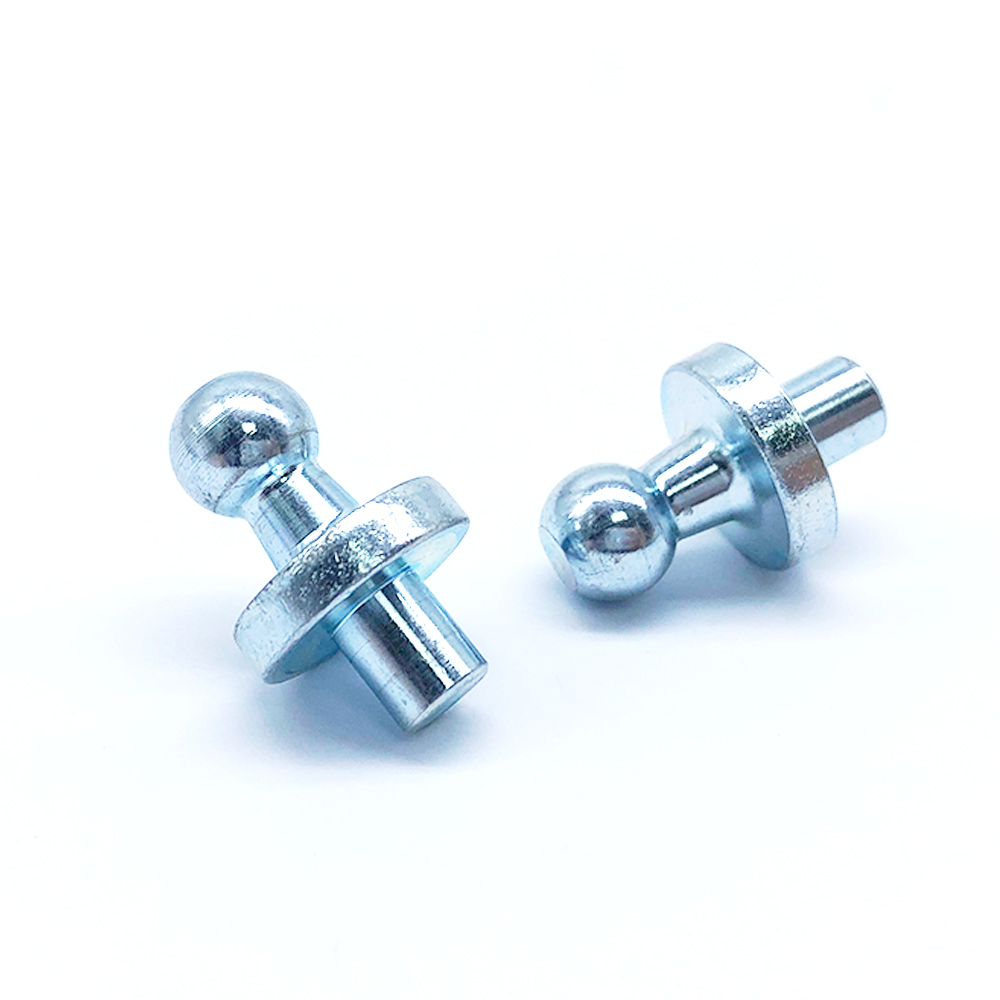

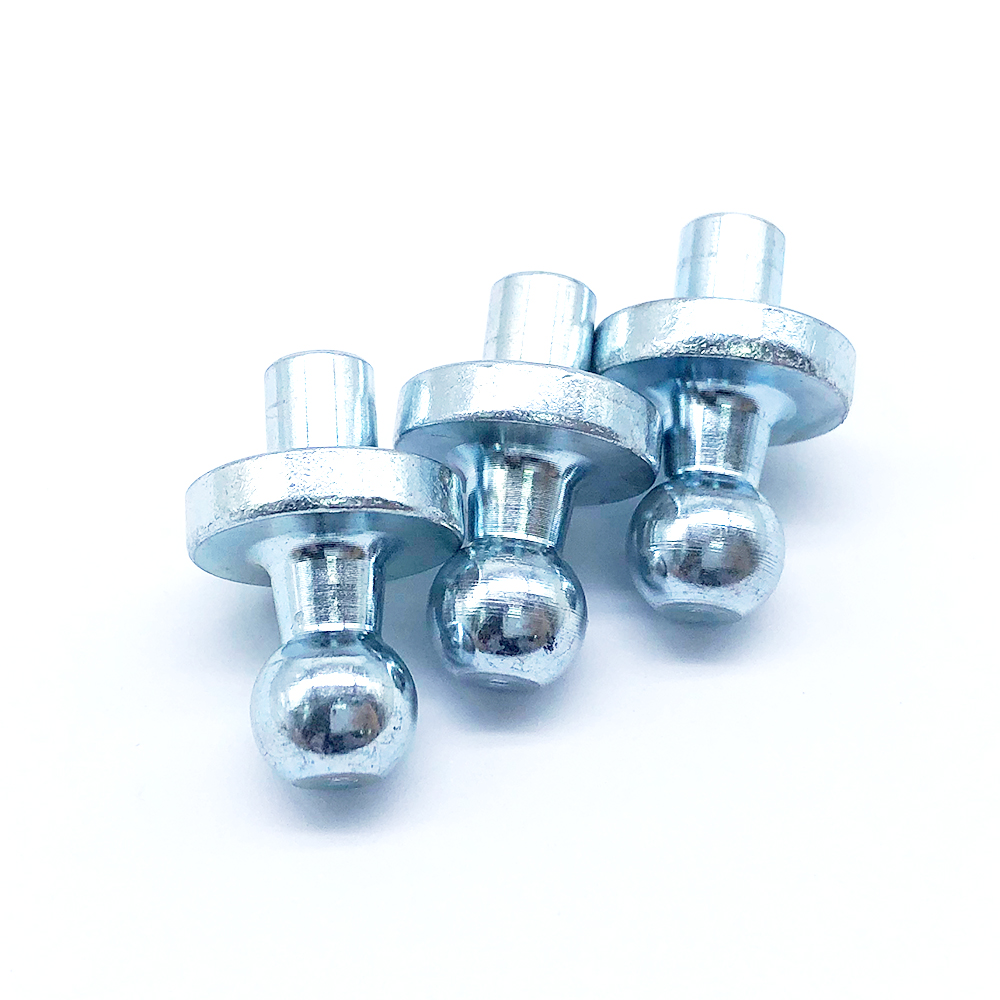
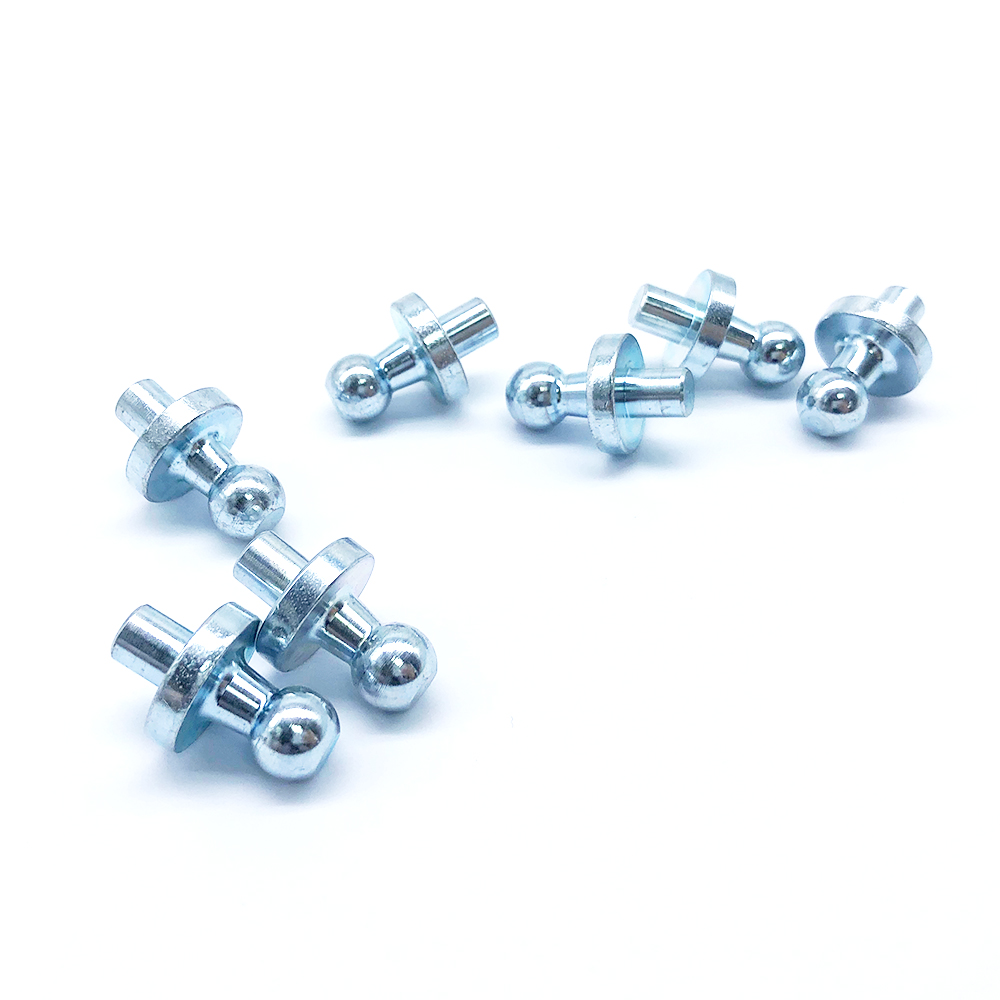
Size: R9.9*26h*6.9
Grade: 10
Material: Al6061
Finish: Blue and white zinc plating, Heat treatment
Ball-Shaped Head: The defining feature of a ball head stud is its spherical head, which may be fully spherical or only partially rounded. The ball-shaped head allows the stud to provide a pivot or adjustable point of contact between parts.
Threaded Shaft: Like most studs, the shaft of a ball head stud is typically threaded, allowing it to be screwed into a corresponding female threaded hole. The shaft is used to secure the stud in place, while the ball head allows for flexible movement or adjustment of connected parts.
Material: Ball head studs are usually made from durable materials such as:
Surface Treatment: Depending on the application, the surface of the ball head stud might be treated with coatings or finishes to enhance corrosion resistance, improve wear resistance, or increase friction in the joint. Common treatments include plating, anodizing, or heat treating.
Size and Thread Types: Ball head studs are available in various sizes, thread types (metric, imperial), and lengths to accommodate different applications. The threads on the shaft may be fine or coarse, depending on the required grip or load-bearing capacity.
Automotive: Ball head studs are widely used in automotive applications, especially in suspension systems, steering linkages, and other areas where flexible, pivoting connections are necessary. For example, the ball joints in vehicle suspension systems often use ball head studs as part of the pivot mechanism.
Robotics: In robotic arms or other robotic systems, ball head studs are used to create pivot points between segments or joints. The ball head allows for smooth, controlled movement and adjustment of the parts during operation.
Machinery and Equipment: Ball head studs are used in machinery where parts need to rotate or adjust to varying angles. They can be found in conveyor systems, industrial arms, or any system requiring adjustable pivot points.
Cameras and Photography: In the photography industry, ball head studs are used in camera tripod heads. The ball head allows the camera to pivot smoothly in multiple directions, providing flexibility in positioning the camera without the need to loosen and tighten multiple knobs.
Aerospace: In the aerospace industry, ball head studs are used in systems where pivoting or adjustable connections are needed. These fasteners can be used in aircraft control linkages or other systems requiring precise movement and flexibility.
Furniture: In adjustable furniture designs, such as chairs or tables with pivoting or reclining parts, ball head studs are used to allow parts to rotate or adjust to the desired angle while maintaining a secure connection.
Medical Devices: Ball head studs are sometimes used in medical equipment for connecting adjustable parts, such as arms or joints in surgical instruments or diagnostic devices.
Sports Equipment: Some sports equipment, such as adjustable mounts or handlebars for bicycles and motorcycles, uses ball head studs to enable flexible, quick adjustments of components.
Flexibility: The ball-shaped head allows for a wide range of motion and flexibility, making it ideal for applications requiring rotational or pivoting movement.
Ease of Adjustment: Ball head studs provide an easy way to adjust the angle or positioning of parts. The spherical head allows for quick, simple adjustments without needing to disassemble or reassemble the components.
Durability: Made from strong materials like steel or stainless steel, ball head studs are capable of withstanding high loads, vibration, and wear in demanding environments.
Space Efficiency: The compact design of a ball head stud allows for efficient use of space while providing a robust and functional pivot or adjustable joint.
Simple Design: Ball head studs have a relatively simple design, which makes them easy to use and maintain. They are a cost-effective solution for creating adjustable and flexible connections between parts.

SUNO GROUP LIMITED founded in 1990 and certificated by ISO 9001 & IATF 16949, is a professional automotive fasteners supplier in China.