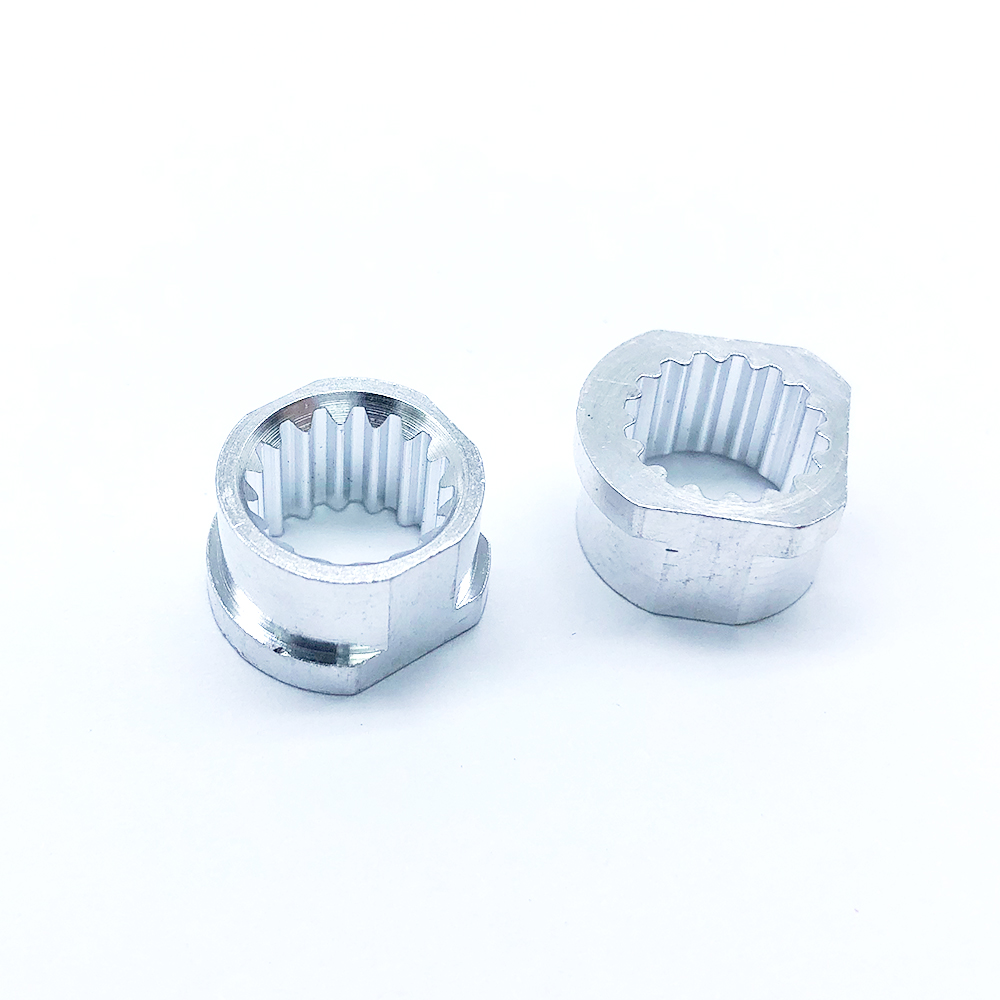
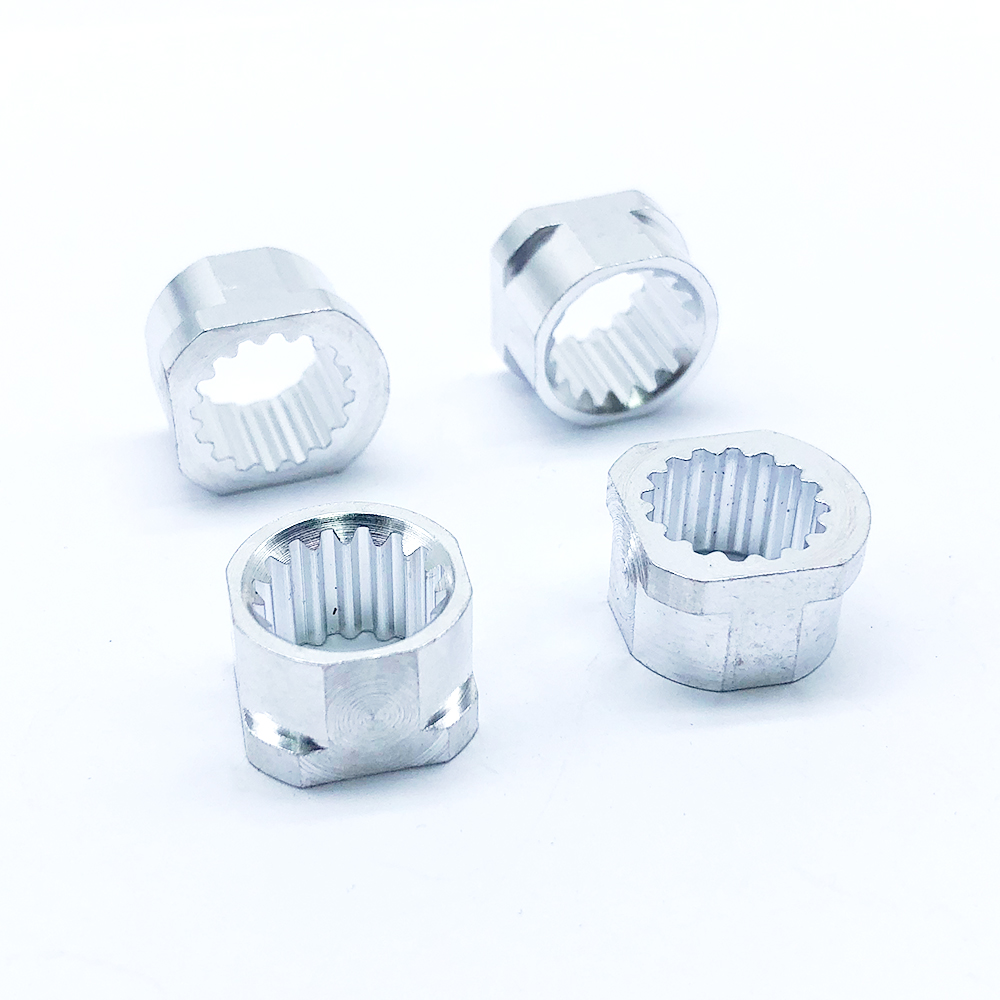
A splined sleeve is a cylindrical component with internal or external splines (grooves or teeth) that allow it to engage with other parts of a mechanical system. It is commonly used to connect two rotating parts, such as shafts, gears, or couplings, in a way that ensures a secure, non-slip connection while allowing for the transmission of torque or rotational movement.
Splines: The splines are grooves or teeth on the inside or outside surface of the sleeve. The design of the splines allows the sleeve to engage with a corresponding part, such as a shaft, and create a tight fit that resists slipping or movement.
Internal Splines: These are grooves cut into the inner diameter of the sleeve, designed to fit over the external splines of a shaft or other rotating component.
External Splines: These are grooves cut on the outer diameter of the sleeve, allowing it to fit into a part with internal splines, such as a gear or coupling.
Material: Splined sleeves are typically made from high-strength materials like steel, stainless steel, or alloy materials to handle high torque and stress. Some applications may require special materials for corrosion resistance or wear resistance.
Length and Diameter: The size of a splined sleeve is chosen to match the dimensions of the parts it will connect. They are available in various lengths and diameters to accommodate different mechanical systems.
Fit Type: Splined sleeves can be designed for either a tight fit (for rigid, high-torque applications) or a loose fit (for applications where easy assembly and disassembly are more important).
Common Uses:
Automotive: Splined sleeves are commonly used in automotive drivetrains, including gearboxes, differential gears, and coupling components, to transfer rotational force between parts like shafts, gears, and axles.
Industrial Equipment: In machinery and heavy industrial equipment, splined sleeves are used in power transmission systems to connect shafts and gears or pulleys, allowing the transfer of power with high efficiency and minimal slippage.
Agricultural Machinery: Splined sleeves are frequently used in farm equipment like tractors and harvesters, where high torque and rotational force need to be transmitted between rotating parts.
Aerospace: In aerospace applications, splined sleeves are used to connect rotating components, such as in turbine engines or other high-precision systems.
Power Tools and Heavy Machinery: Used to transmit rotational force from motors to various parts, like drills, grinders, or conveyors.
Advantages of Splined Sleeves:
Efficient Power Transmission: The engagement between the splines provides a high torque transmission with minimal slippage, making them ideal for power transfer in high-performance systems.
Durability: The design of splined sleeves distributes the load more evenly than simple cylindrical shafts, leading to less wear and longer service life.
Adjustability: In some designs, the ability to slide or adjust the position of the sleeve on the shaft can allow for fine-tuning of the system.
Reduced Wear: The larger surface contact area provided by the splines helps reduce wear and tear, as opposed to traditional keyed shafts that rely on a smaller contact area.
Common Applications:
Drivetrain Components in Vehicles: Connecting shafts, axles, and gears in a vehicle’s transmission or differential system.
Agricultural Equipment: Transmitting power from the tractor engine to implements like plows, seeders, or harvesters.
Industrial Machinery: Used in conveyors, mixers, and pumps to transfer rotational force between moving parts.
Robotics: For transmitting rotational motion in robotic joints and actuators.