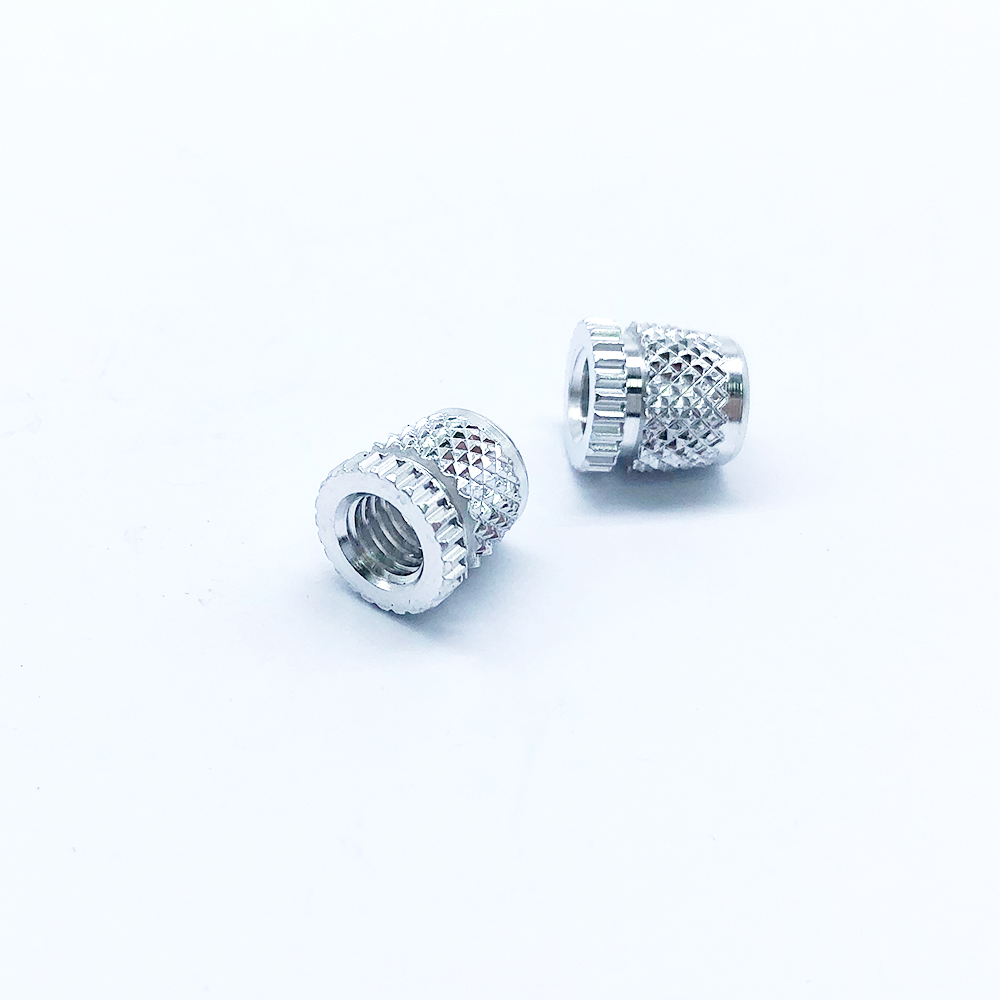
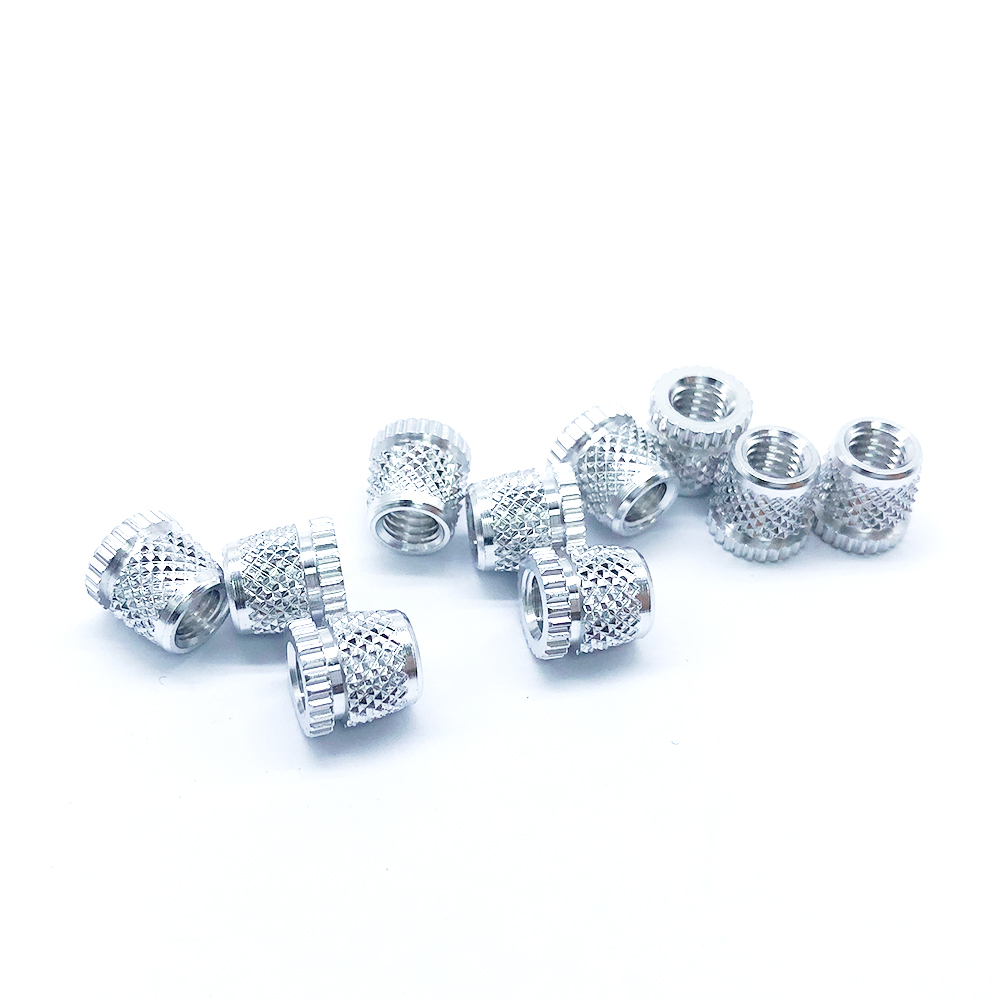
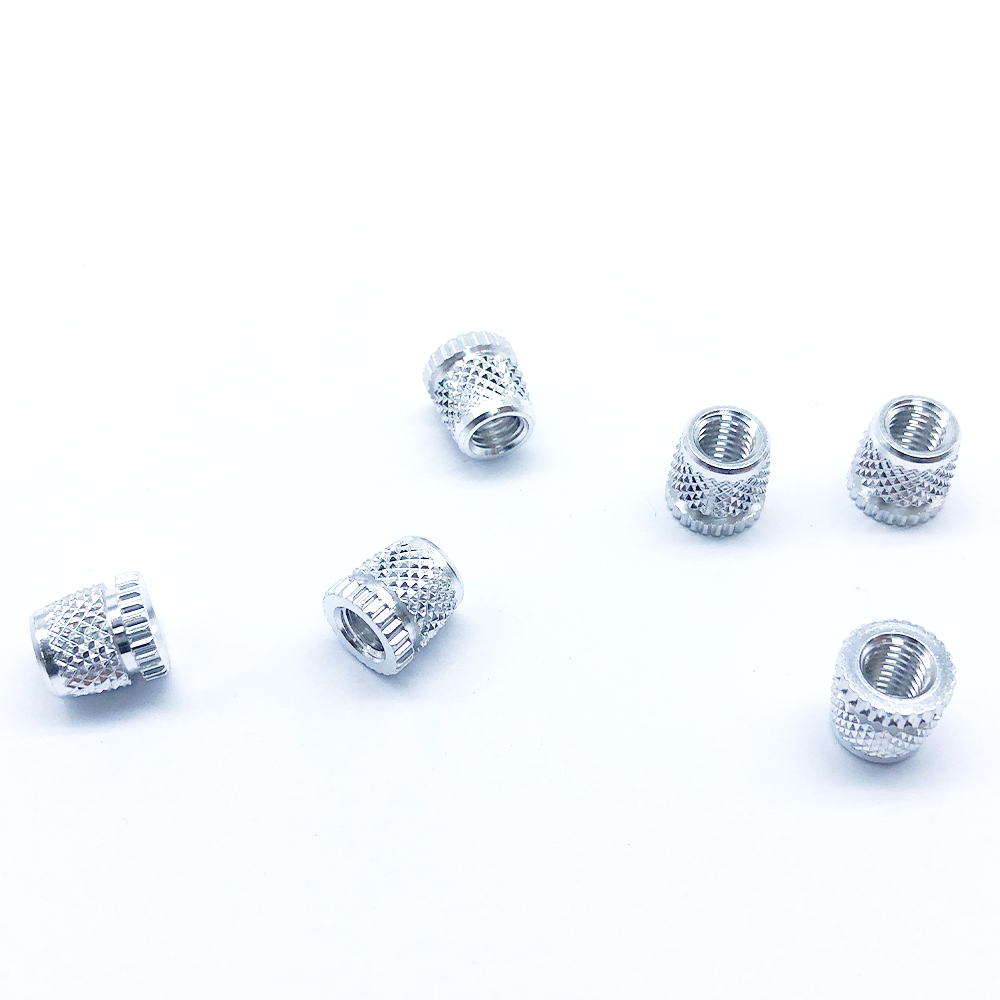
Imperial Knurled Insert

Imperial knurled inserts are a type of threaded insert designed to be used in imperial (inch-based) measurement systems, and they feature knurled (textured) surfaces. These inserts are often used in materials like wood, plastic, or softer metals to provide strong, durable threaded holes for screws or bolts. The knurled surface ensures a strong mechanical bond with the base material, preventing the insert from rotating or pulling out over time.

Size: M5*0.8*10*1*10

Grade: T6

Material: Al6063

Finish: Surface oxidation treatment


Key Features:

  1. Imperial Measurement System:

    • Imperial knurled inserts are designed to work with fasteners and components measured in inches. The thread pitch and diameter of the inserts conform to imperial standards such as UNC (Unified National Coarse) or UNF (Unified National Fine).
    • Common sizes might include 1/4", 5/16", 3/8", and larger, depending on the application.
  2. Knurled Surface:

    • The knurling on the outside of the insert refers to the textured pattern, typically made up of intersecting ridges or grooves. This surface texture provides increased grip and friction when the insert is installed into a material, preventing it from rotating or pulling out under stress.
    • The knurled pattern is particularly beneficial in soft materials (like wood or plastic) where standard threaded inserts might slip or fail to hold securely.
  3. Internal Threads:

    • Knurled inserts typically feature internal threads that are compatible with imperial fasteners. These internal threads can accept screws or bolts, providing a secure connection.
    • The internal threads can be coarse or fine, depending on the specific requirements of the application.
  4. Materials:

    • Brass: Often used for its excellent corrosion resistance, ease of installation, and good mechanical properties. Brass is also non-ferrous, making it suitable for a range of environments, including marine or electronic applications.
    • Steel: Provides high strength and durability, particularly in heavy-duty applications. Steel inserts may be zinc-plated or otherwise coated to enhance corrosion resistance.
    • Stainless Steel: Stainless steel is chosen for its resistance to corrosion, making it suitable for outdoor, marine, or food-grade environments.
    • Aluminum: Lightweight inserts made of aluminum are suitable for applications where weight savings are important, though they may not be as strong as brass or steel.
  5. Design:

    • Flanged vs. Non-Flanged: Some knurled inserts have a flange at the top to provide additional grip on the material, while others may be unflanged for use in materials where the insert is completely embedded.
    • Insert Length: The length of the insert can vary, depending on the thickness of the material in which it is being installed. The length should be chosen so that the insert provides sufficient anchorage without protruding beyond the surface.
    • Thread Type: Knurled inserts come in different thread types (coarse, fine) and sizes, with each type suited to different materials and performance requirements. For example, UNC (Unified National Coarse) threads are ideal for softer materials, while UNF (Unified National Fine) threads are typically used in harder materials where higher thread density is needed.
  6. Installation:

    • Press Fit: Most knurled inserts are installed by pressing them into a pre-drilled hole. The knurled surface grips the material during installation, ensuring the insert remains securely in place. No additional fasteners are needed during installation.
    • Tapping Insert: In some cases, the insert may require a pre-tapped hole, especially if the material is harder or if the insert is being used in a more demanding application.
    • Installation Tools: Some knurled inserts can be installed using simple hand tools, while others may require specialized equipment for precision and efficiency.

Advantages:

  1. Strong Mechanical Bond:

    • The knurled surface improves the friction and grip between the insert and the base material, providing a strong and stable connection. This is especially valuable in softer materials like plastic, wood, and aluminum, where other types of inserts may struggle to hold firmly.
  2. Prevents Pull-Out and Rotation:

    • The texture of the knurled surface prevents the insert from spinning or pulling out during use, even under high torque or stress. This ensures the durability and reliability of the connection over time.
  3. Reusable and Removable:

    • Because the insert provides a durable threaded hole, screws or bolts can be installed and removed multiple times without damaging the base material, making it ideal for applications that require frequent assembly and disassembly.
  4. Versatility in Materials:

    • These inserts are suitable for a wide range of base materials, including soft metals, plastics, wood, and composite materials. This versatility makes them popular across a wide range of industries.
  5. Ease of Installation:

    • Knurled inserts are relatively easy to install using hand tools or basic machinery, and they don’t require special equipment like welding or adhesives. This can lower labor costs and speed up the assembly process.
  6. Improved Performance in Soft Materials:

    • In materials that cannot hold traditional threads effectively, knurled inserts provide a solution for creating secure threaded connections that would otherwise be impossible.

Common Applications:

  1. Woodworking:

    • Knurled inserts are commonly used in woodworking applications, especially in furniture assembly, where imperial measurements are often standard. The inserts provide a strong, reusable thread for attaching hardware like legs, handles, or brackets to wooden pieces.
    • Wooden cabinetry and DIY projects also benefit from knurled inserts for creating strong, durable connections.
  2. Plastic Enclosures and Housings:

    • In plastic products like electronic housings and enclosures, knurled inserts provide the threaded holes needed to secure components like circuit boards, connectors, or panels. The knurling prevents the insert from rotating or loosening in the plastic material.
  3. Automotive:

    • Knurled inserts are used in the automotive industry for attaching interior parts, such as trim panels or dashboard components. The inserts offer a reliable and durable fastening method, especially for materials like plastic or thin sheet metal.
  4. Electronics:

    • For electronic devices or housings, knurled inserts are used to create secure threaded connections for attaching screws or fasteners, ensuring a solid and durable build. These inserts are often used in consumer electronics, computers, or telecommunications equipment.
  5. Aerospace and Aviation:

    • In aerospace applications, where lightweight and secure connections are crucial, knurled inserts are used to fasten parts in composite materials and plastic housings, reducing the risk of thread wear over time.
  6. Machinery and Equipment:

    • Knurled inserts are also used in machinery and equipment manufacturing, where strong threaded connections are needed in softer base materials. These inserts can be used to secure machinery parts or attachments without the need for complex threading operations.
Contact Us
We served more than 100,000 customers and exported more than 100+ countries in the world.
We have 100+ workers and 10+ R&D and quality employees.

SUNO GROUP LIMITED founded in 1990 and certificated by ISO 9001 & IATF 16949, is a professional automotive fasteners supplier in China.  

Shortcut links
Contact with us
Tel: +86 136 9362 3001

Add:
2110, Floor 18, Building 3, Yard No. 6, East Futong Street, Beijing, China