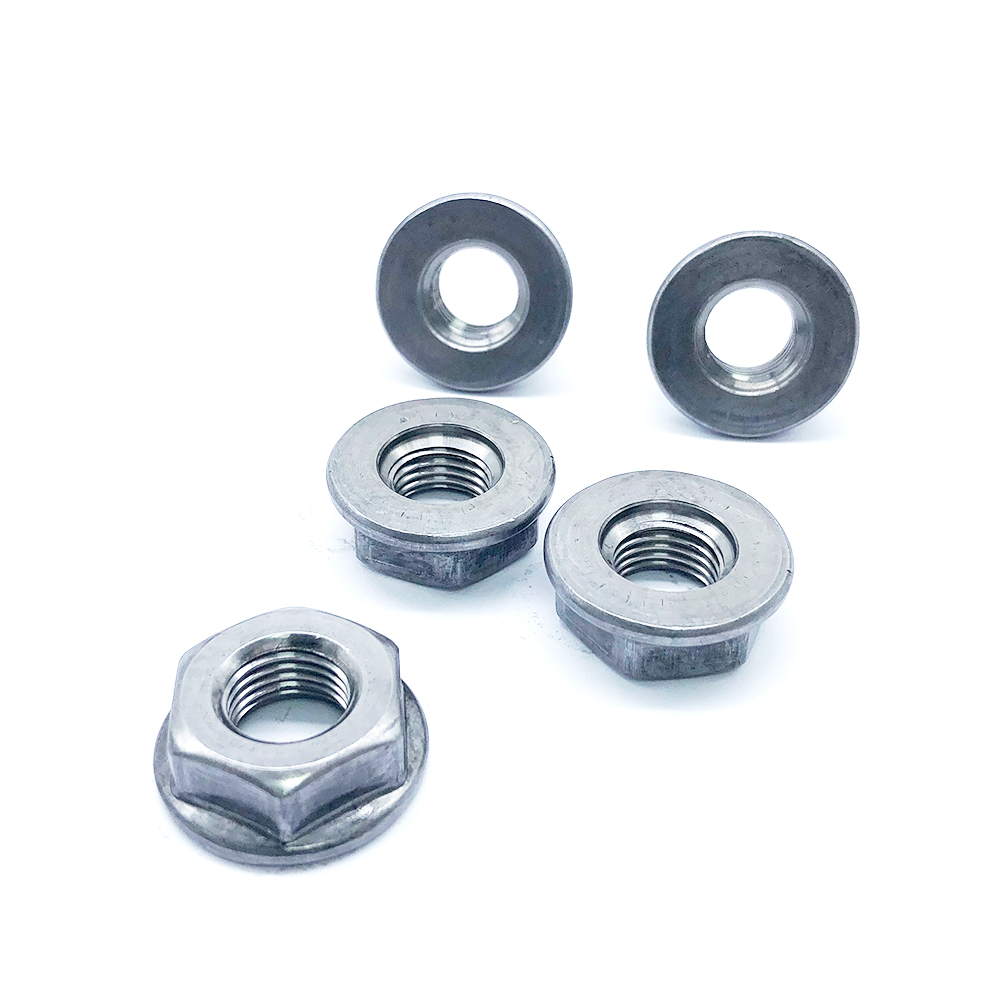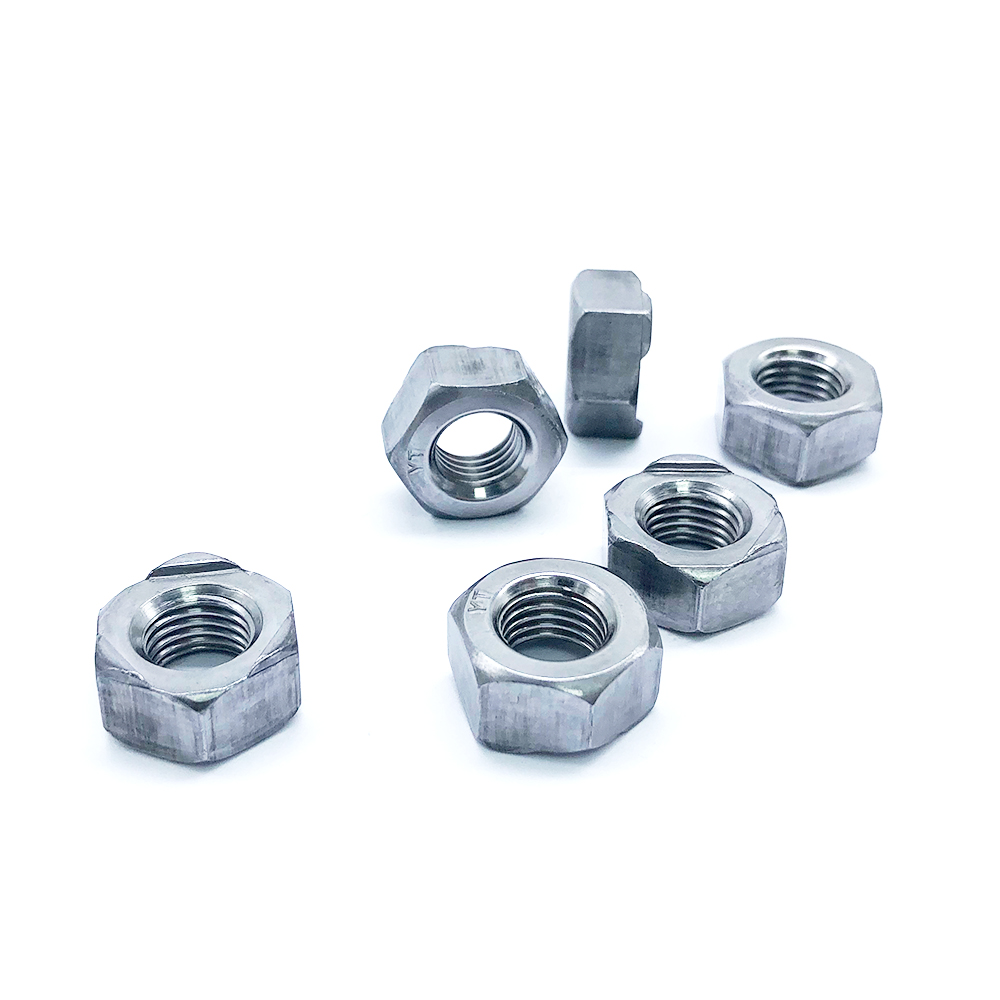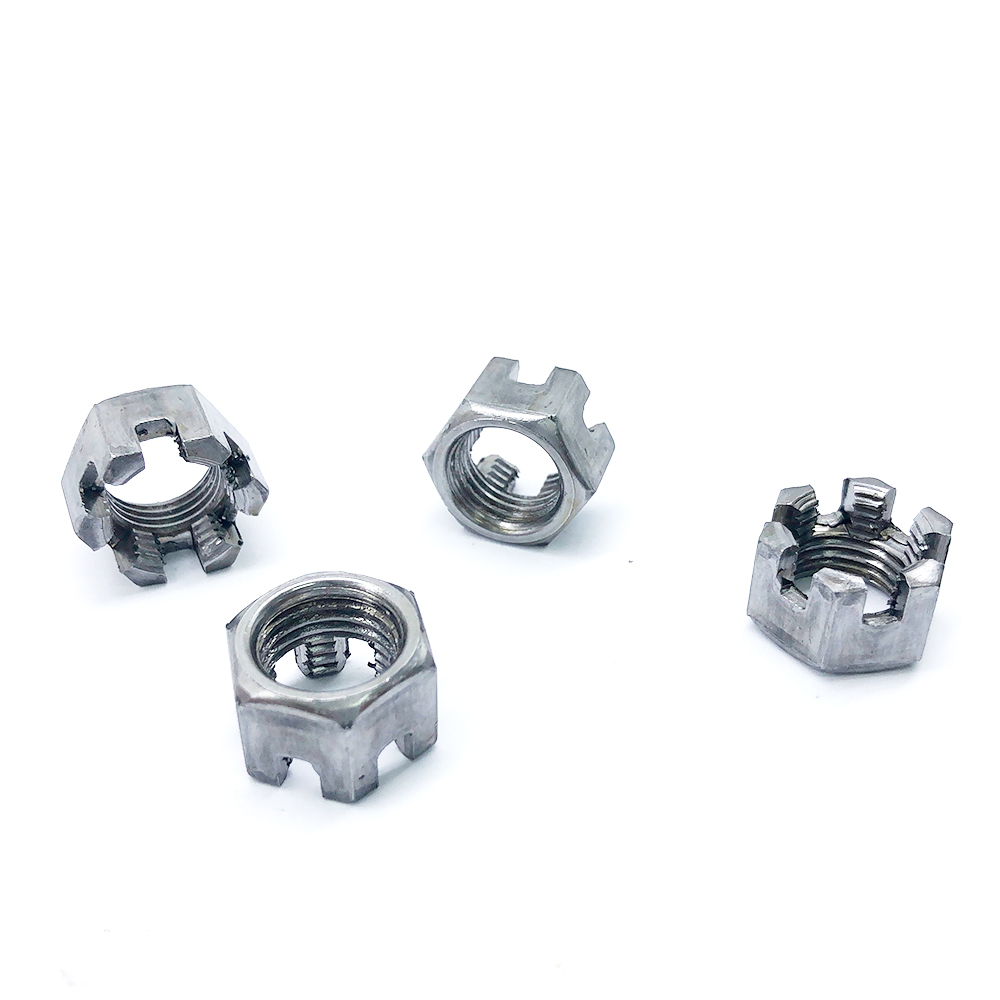
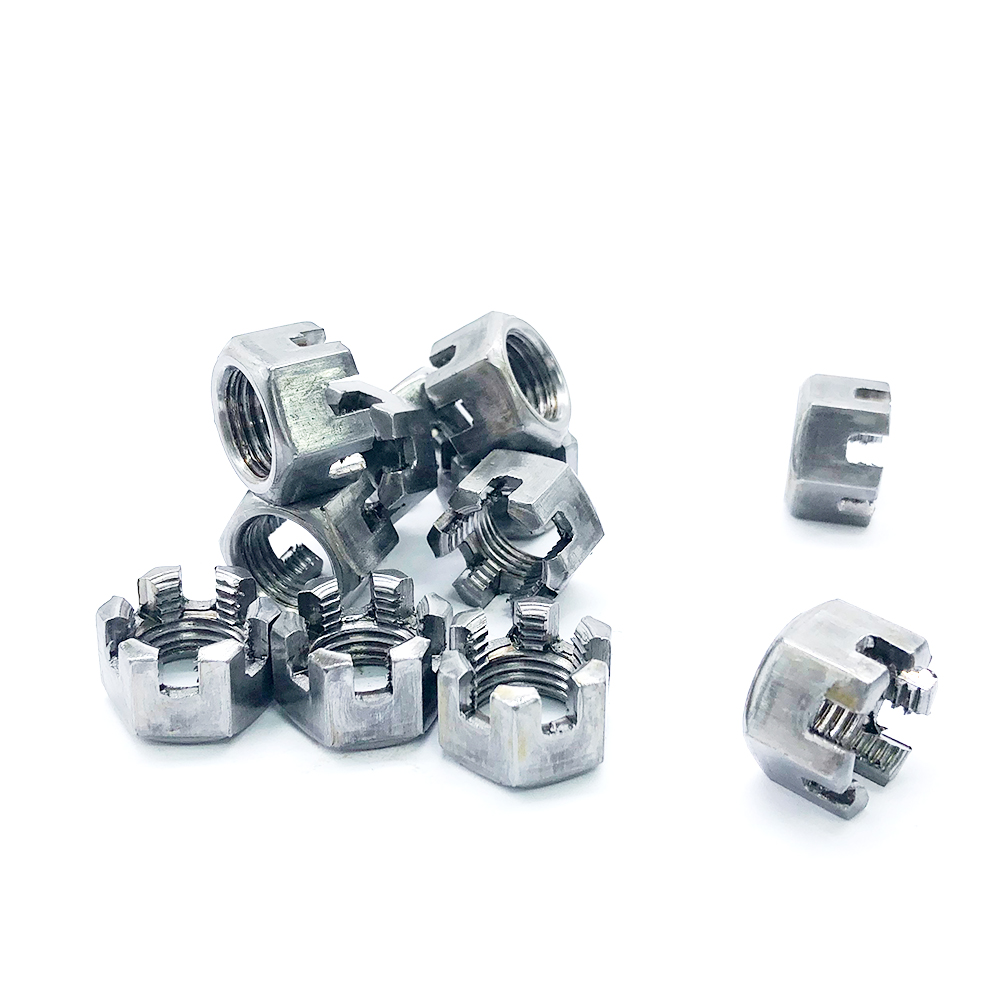
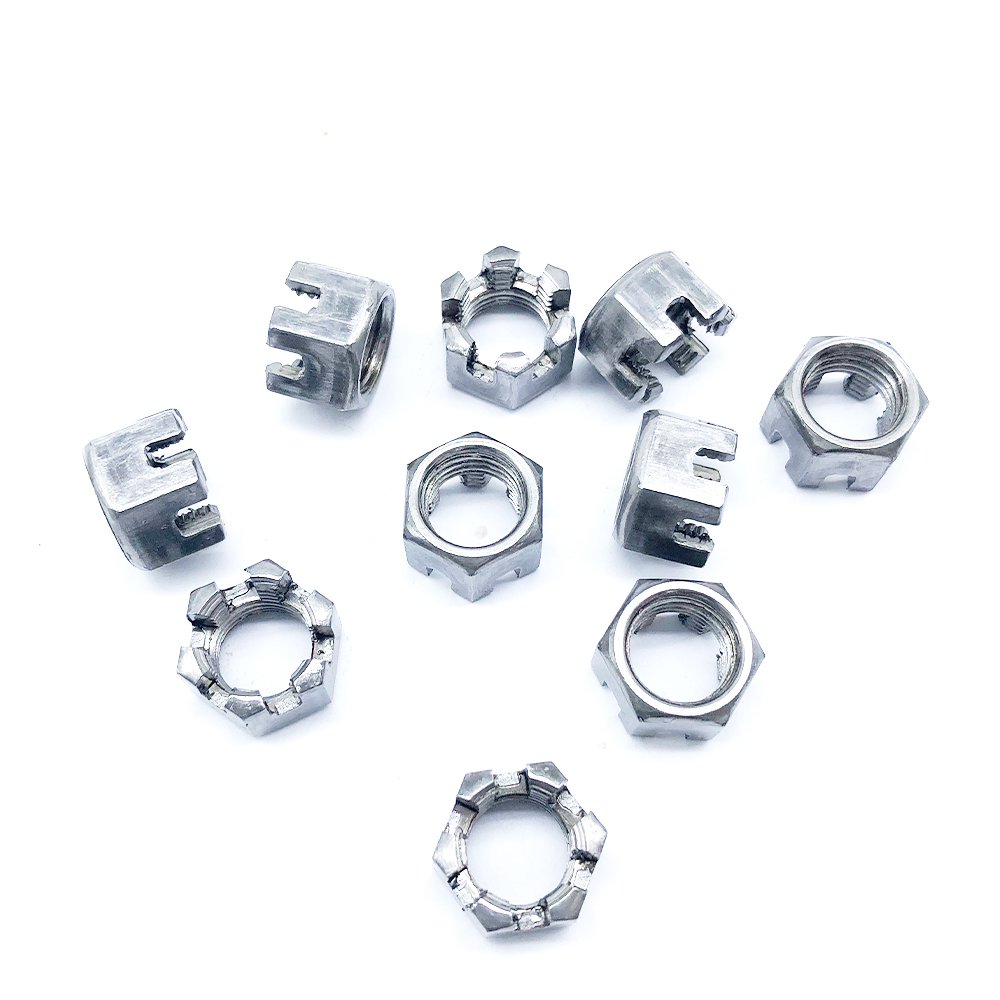
A slotted nut, also known as a castle nut (when combined with a cotter pin), is a type of nut with slots cut into one end. These slots allow the nut to be locked into place with a pin, preventing it from loosening. This design is particularly useful in applications requiring secure, adjustable locking, often in conjunction with a drilled bolt or stud.
Slots on Top: The nut has slots on its top edge, which align with a hole drilled through the bolt or stud, allowing a pin (typically a cotter pin) to pass through. This pin secures the nut and prevents it from rotating.
Castle Nut Variation: The term "castle nut" is used because the slots resemble the battlements of a castle. Castle nuts are a specific type of slotted nut with a cylindrical shape extending upward from the slots, further enhancing the locking ability.
Material: Typically made from steel, stainless steel, or brass, allowing them to handle high loads and resist corrosion when exposed to elements.
Common Uses:
Automotive Applications: Commonly used on axles, steering components, and suspension systems where the nut needs to be securely fastened without risk of loosening due to movement or vibration.
Machinery and Heavy Equipment: Used in high-load or high-vibration areas to provide a secure connection that can withstand movement.
Aerospace and Military Applications: Due to their reliability and resistance to loosening, slotted nuts are also used in critical applications in aircraft and military equipment.
Agricultural Equipment: Used in applications like tractor components, which are subject to heavy vibrations.
Advantages:
Reliable Locking Mechanism: The use of a cotter pin or similar locking device provides a high level of security against loosening.
Adjustable: The nut can be adjusted and retightened as needed, and the cotter pin can be replaced if necessary.
High Load Capacity: Suitable for high-stress applications that require durability and stability.