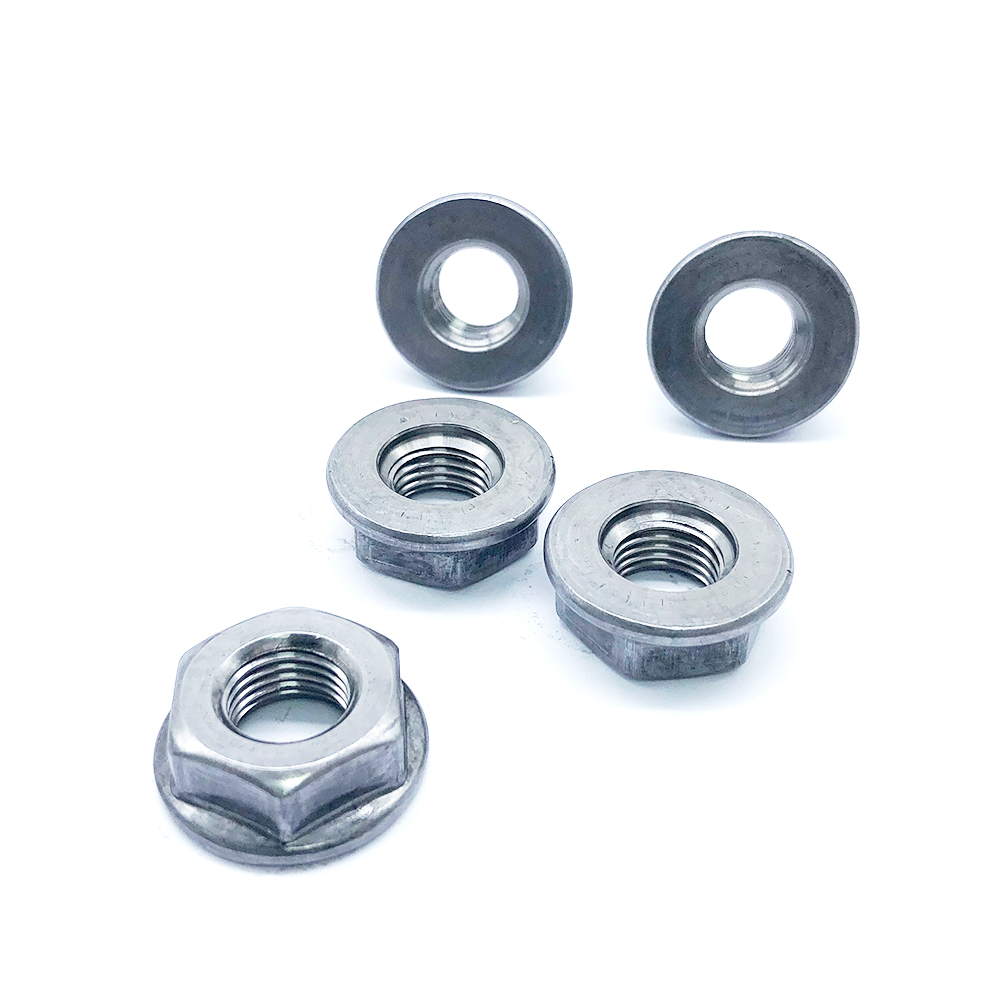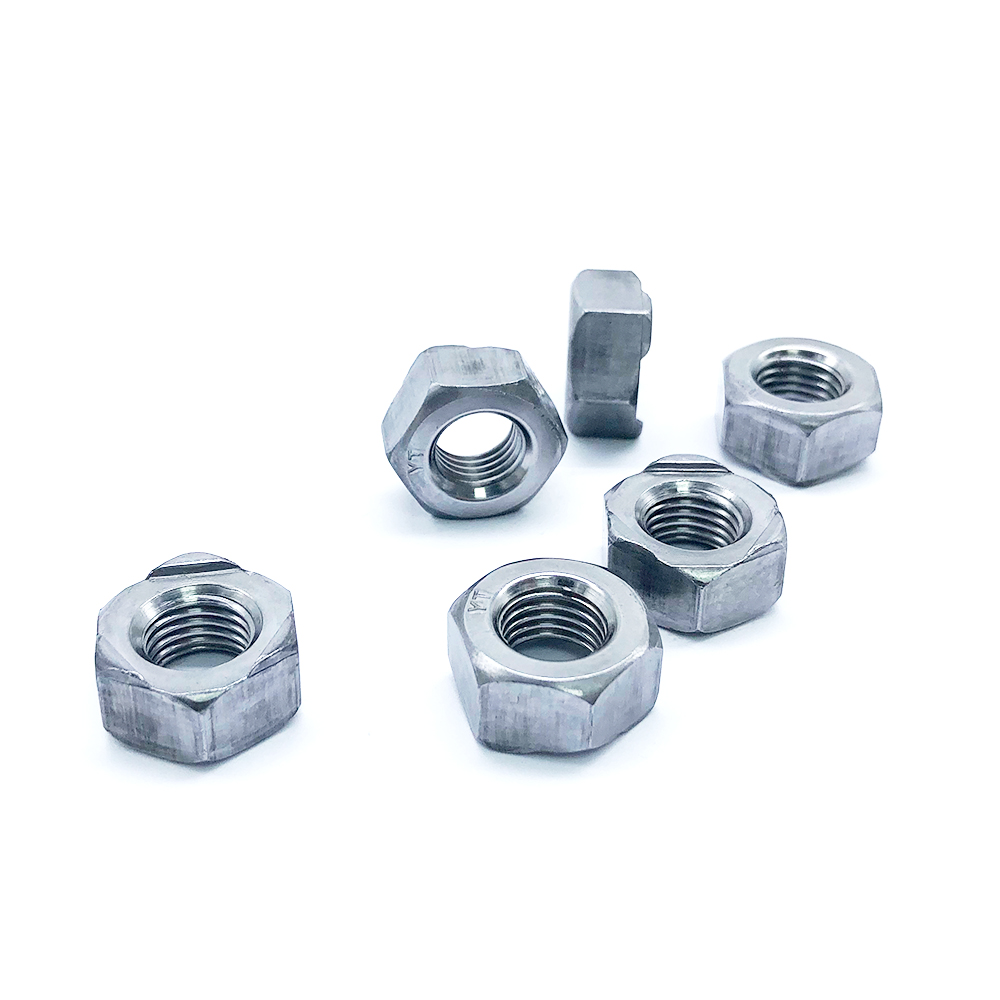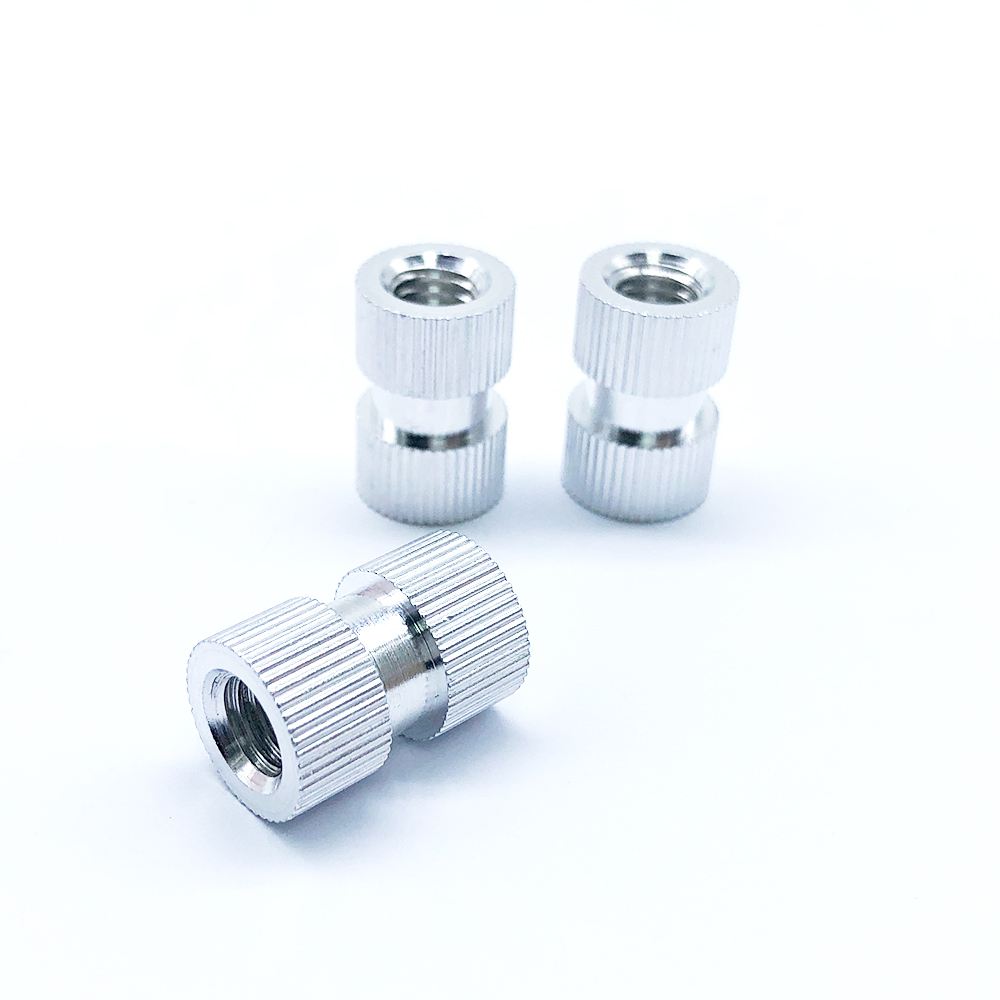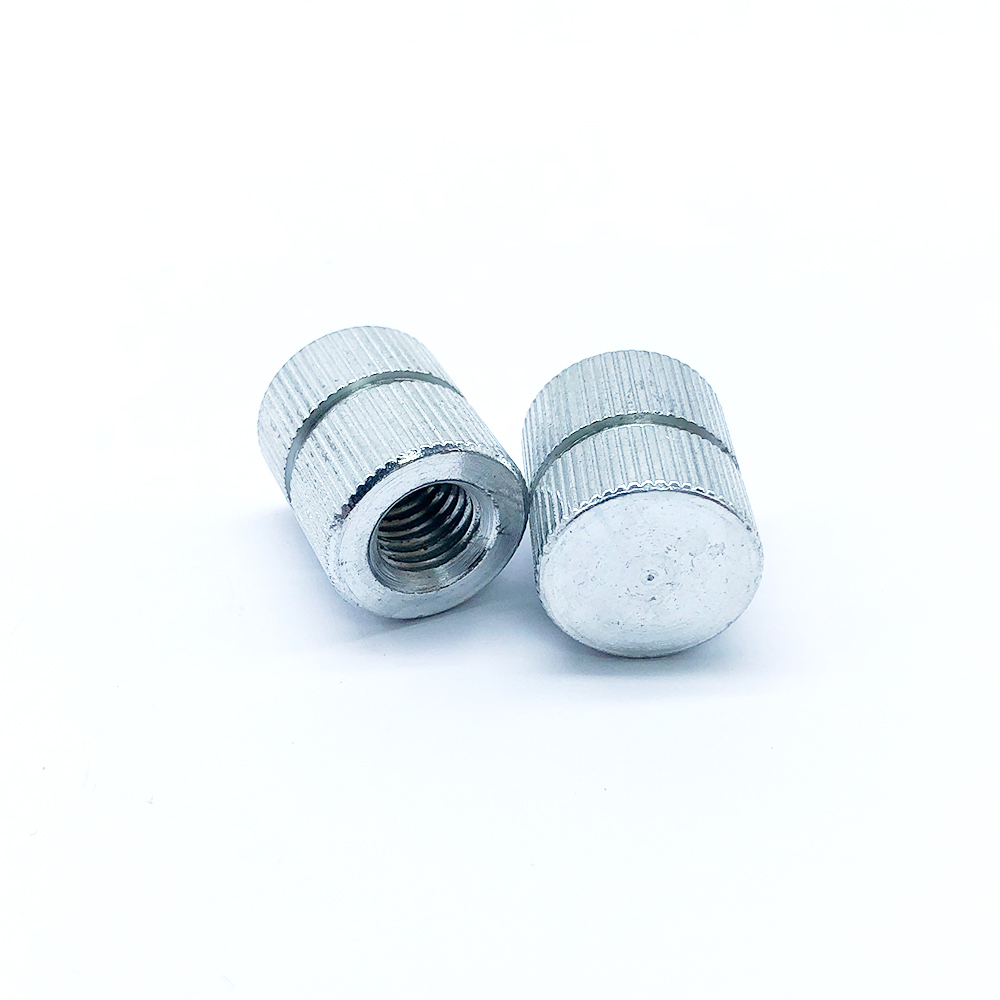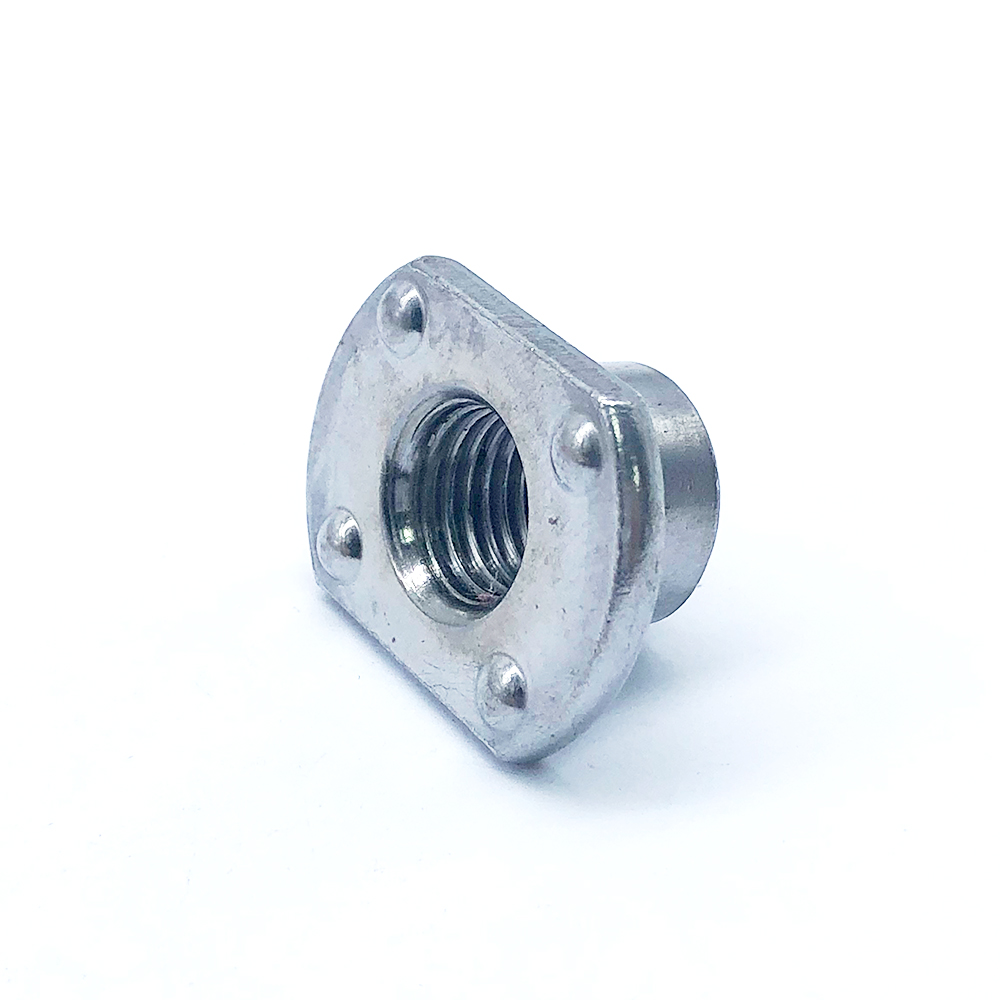
A four-point T-shaped welding nut is a type of weld nut that combines the stability and anchoring features of a T-nut with the added security of welding. This type of nut is typically used in metalworking applications where a strong, permanent threaded connection is required, often in structural or automotive assemblies.
Four-Point Weld Projections: This nut has four small projections or points on its flange, which allow it to be securely welded to a metal surface. These points focus the welding heat for a strong and precise weld.
T-Shape: The T-shape, with a flat flange and protruding barrel, allows it to sit flush against the metal surface, giving added stability once welded in place.
Threaded Barrel: Contains internal threads to accommodate bolts or screws, enabling a strong and permanent threaded attachment.
Material: Usually made of steel or stainless steel to withstand the heat of welding and ensure durability in high-stress applications.
Common Uses:
Automotive Manufacturing: Often used in car frames, engine mounts, and exhaust systems, where components need a reliable, permanent threaded attachment that can withstand vibration and stress.
Industrial Machinery: Used in heavy equipment where stable and strong connections are necessary.
Structural Applications: Employed in construction and metal fabrication to provide strong, reliable connections in structural components.
Advantages:
Welded Stability: The four weld points ensure a strong bond with the base metal, reducing the risk of loosening over time.
High Load Capacity: Offers strong resistance to pull-out and shear forces, making it suitable for high-load applications.
Flush Surface: The flat flange allows it to sit flush with the metal surface, preventing snagging and providing a cleaner finish.