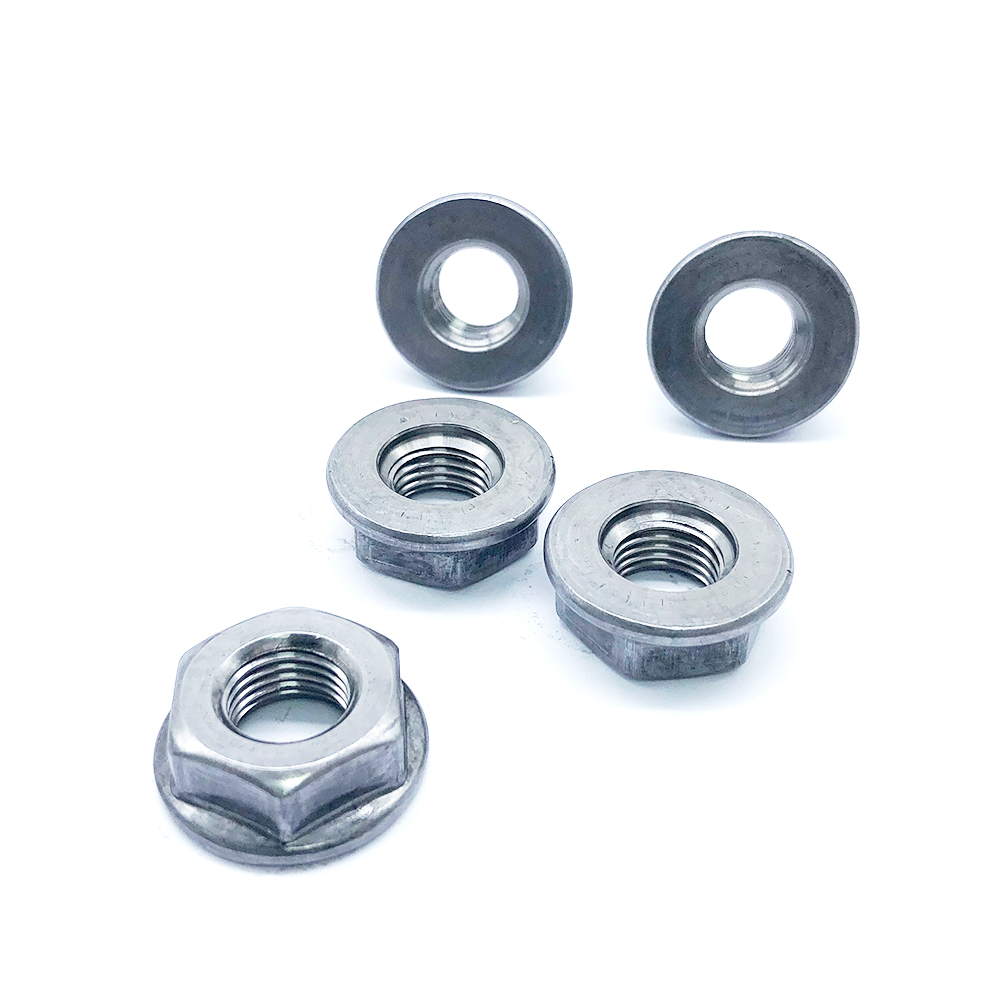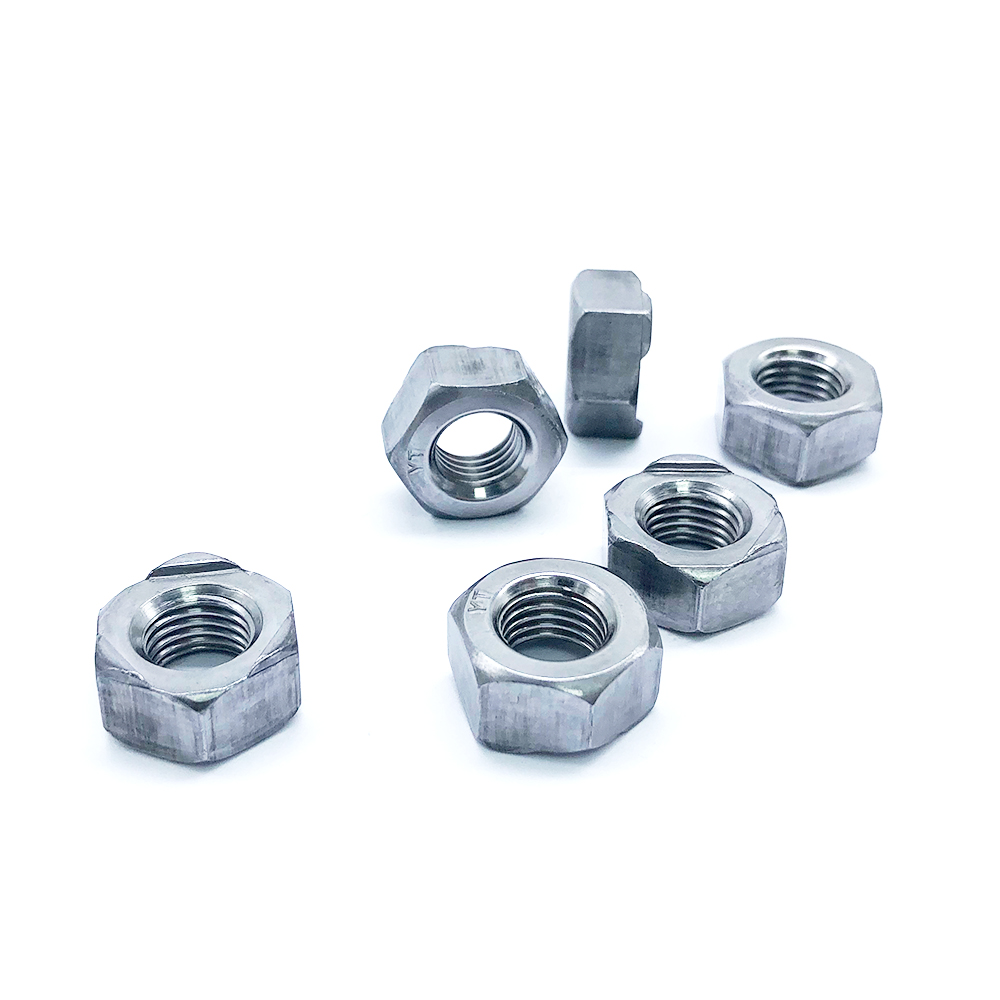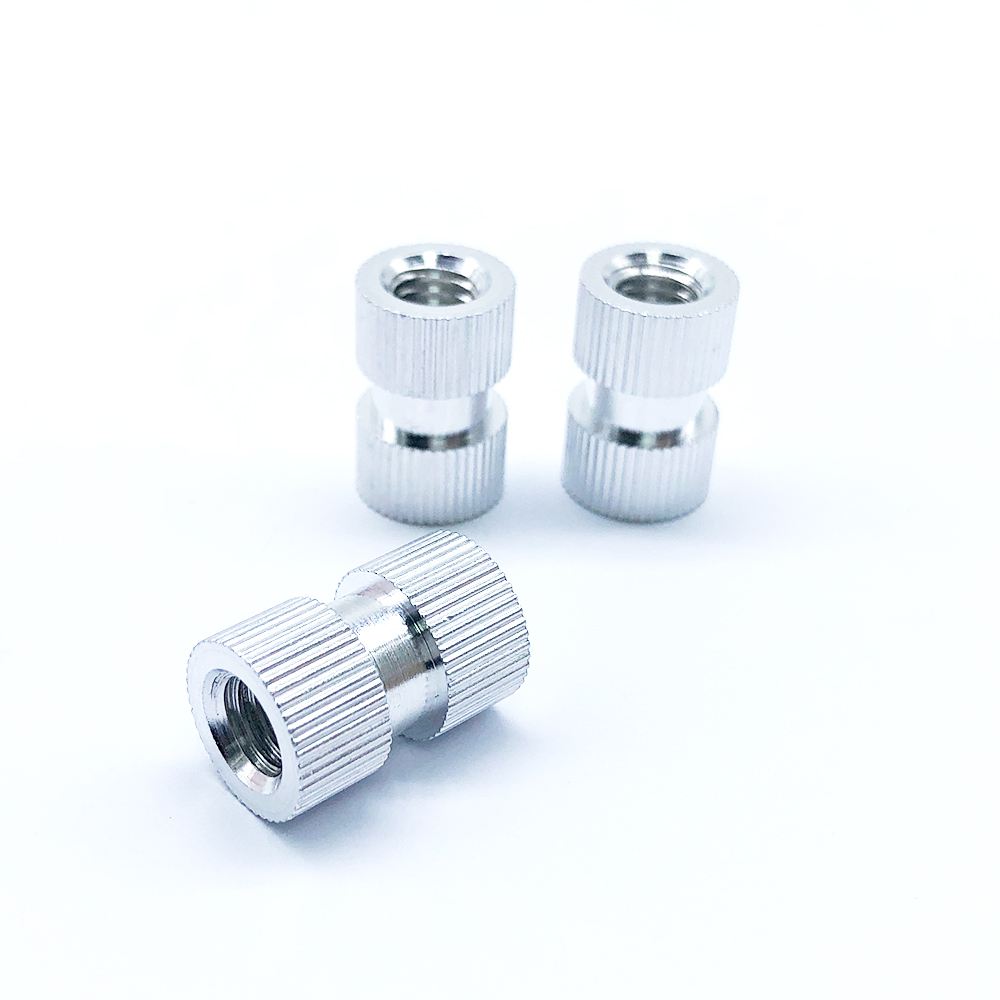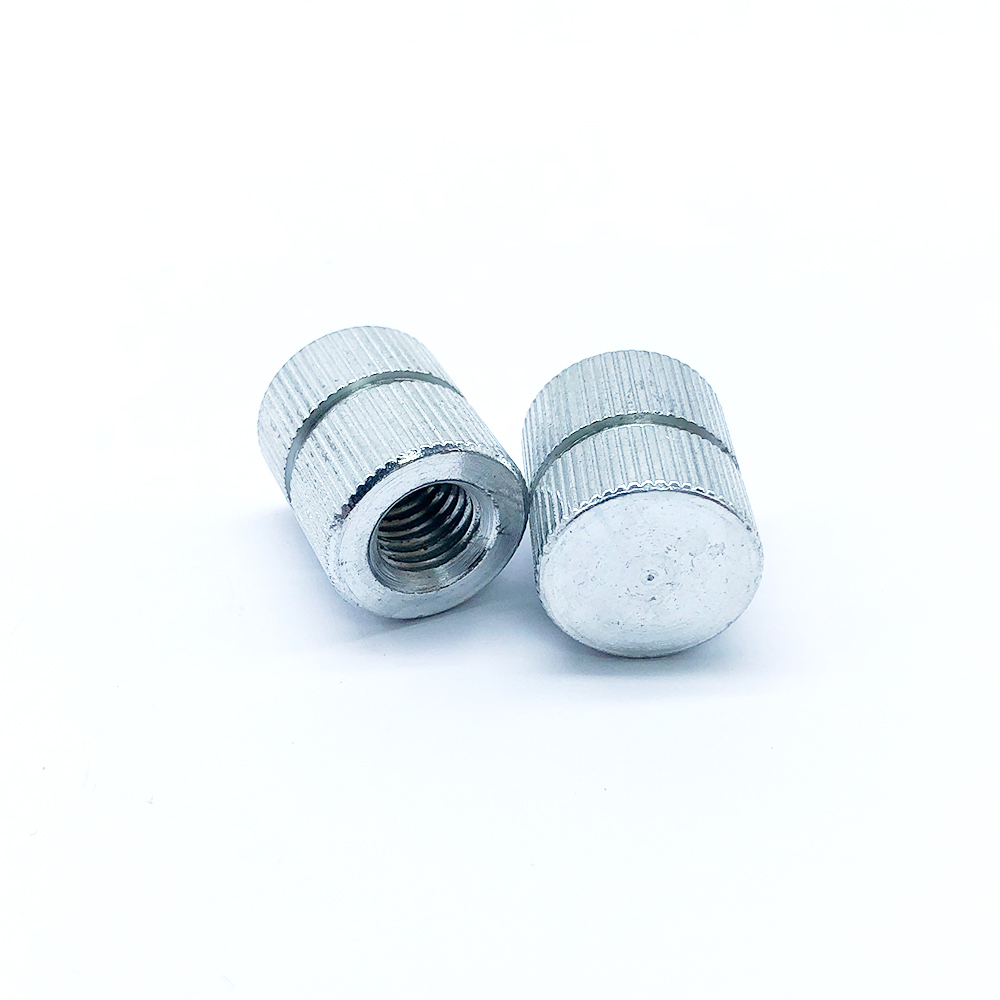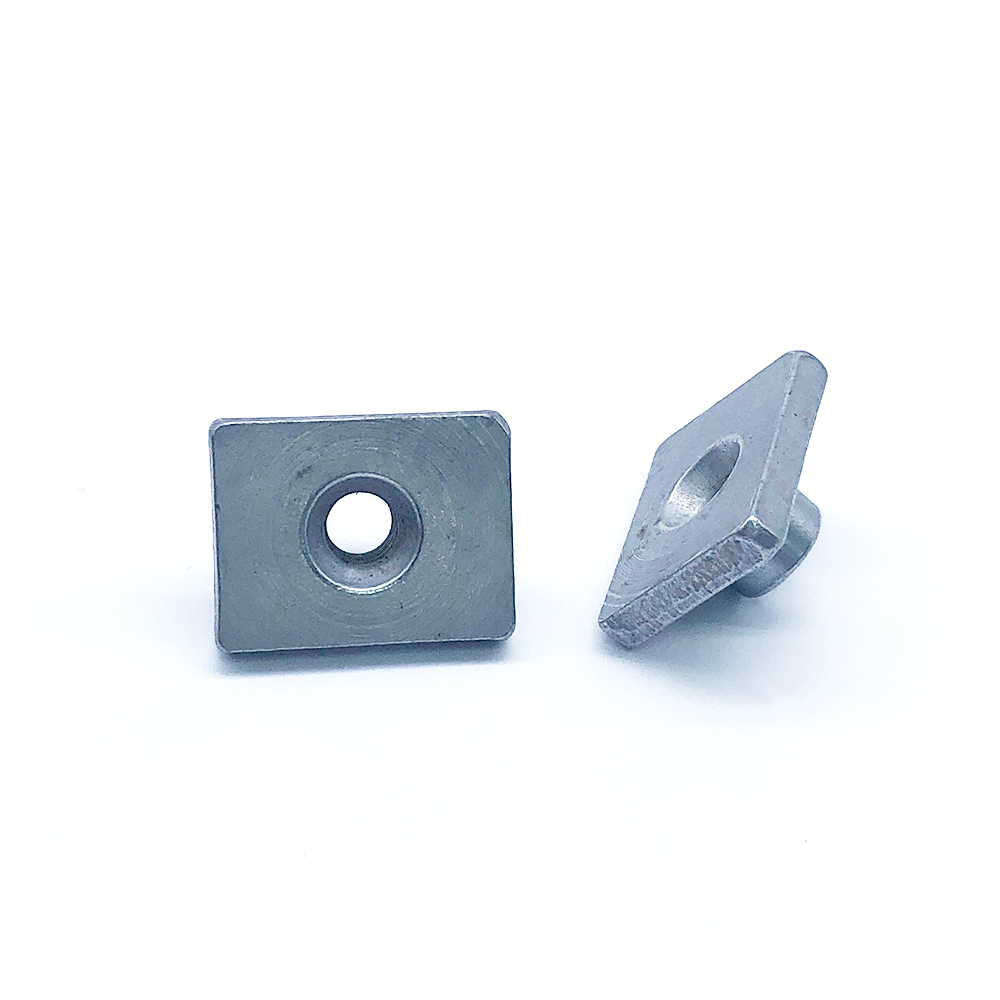
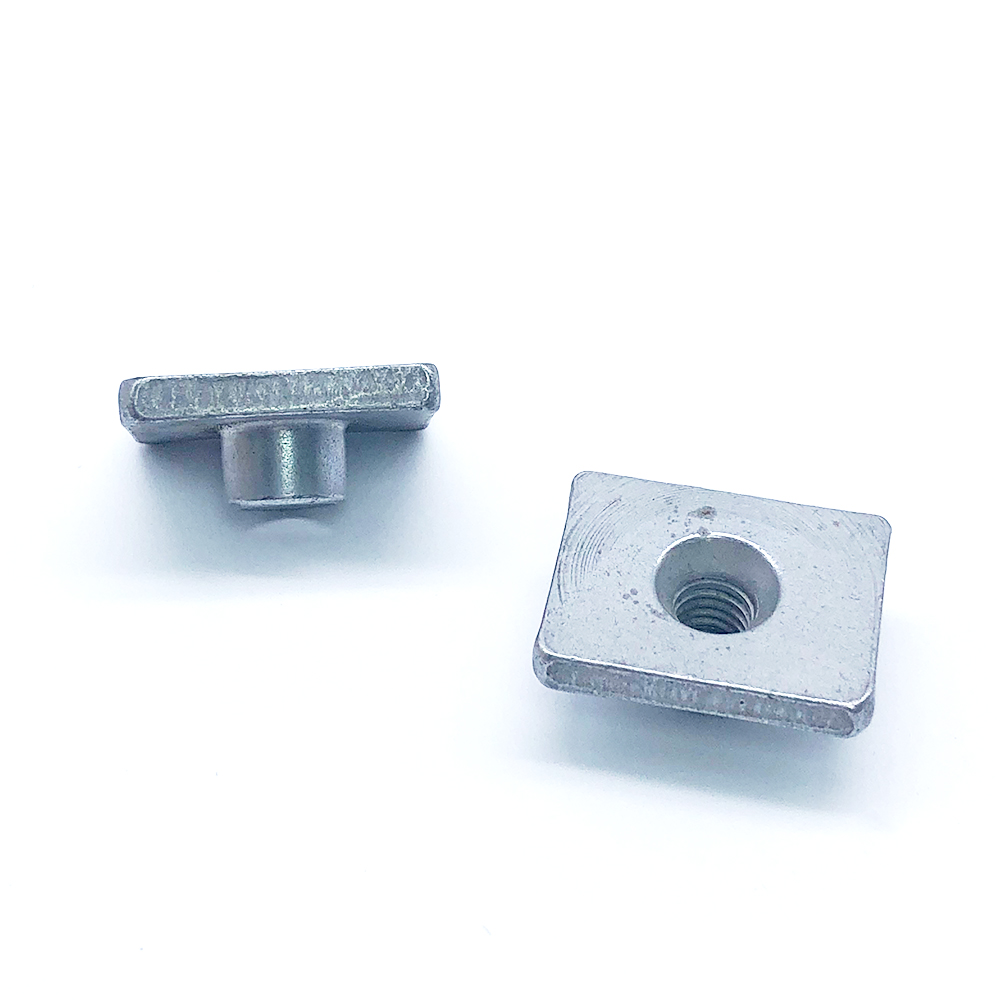
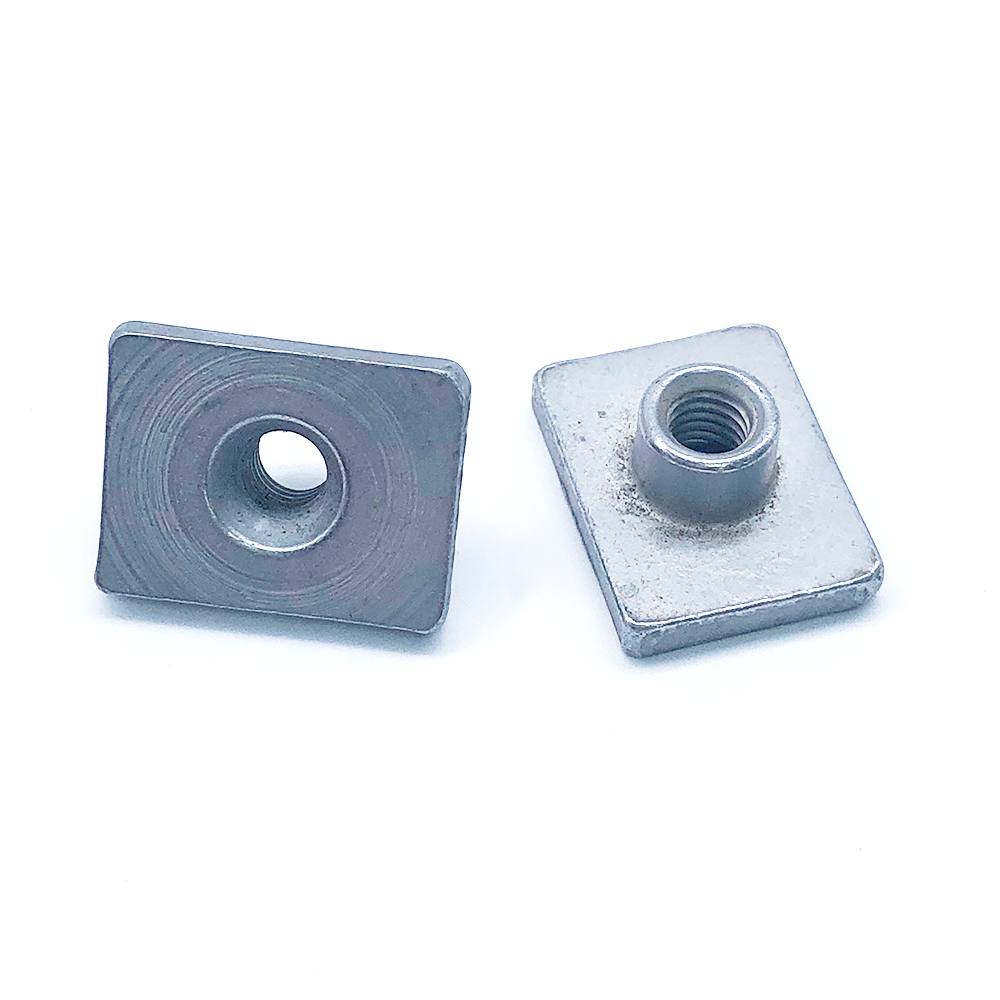
A T-shaped nut, commonly referred to as a T-nut or tee nut, is a type of fastener with a "T" shape used to create a threaded hole in various materials, especially wood and sometimes metal or composite materials. It provides a strong, secure connection, often used where high pull-out strength is required.
T-Shape: The flat top of the "T" sits flush against the surface, and prongs or barbs extend down into the material, securing the nut in place and preventing rotation.
Threaded Barrel: A threaded barrel extends perpendicular to the T-shaped flange, allowing bolts or screws to be inserted from the opposite side of the material.
Prongs or Flange: T-nuts usually have prongs or teeth on the flange that dig into the base material (like wood) when tightened, offering a strong grip that resists loosening and pull-out.
Common Uses:
Furniture Assembly: Commonly used in wooden furniture for attaching legs, handles, and other components, providing a stable threaded anchor.
Climbing Holds: Widely used in indoor climbing walls to mount climbing holds securely into plywood or wooden panels.
Fixtures and Jigs: In carpentry and woodworking, T-nuts are used to attach jigs and fixtures, as they can withstand repeated assembly and disassembly.
Metal and Composite Panels: In some cases, T-nuts are embedded in thin metal or composite panels to create a threaded connection.
Advantages:
Easy Installation: Installed by tapping into a pre-drilled hole with a hammer or press.
Reusable Threads: The internal threading allows bolts or screws to be repeatedly inserted and removed without damaging the base material.
Strong Holding Power: The pronged design offers strong resistance against pull-out forces.